
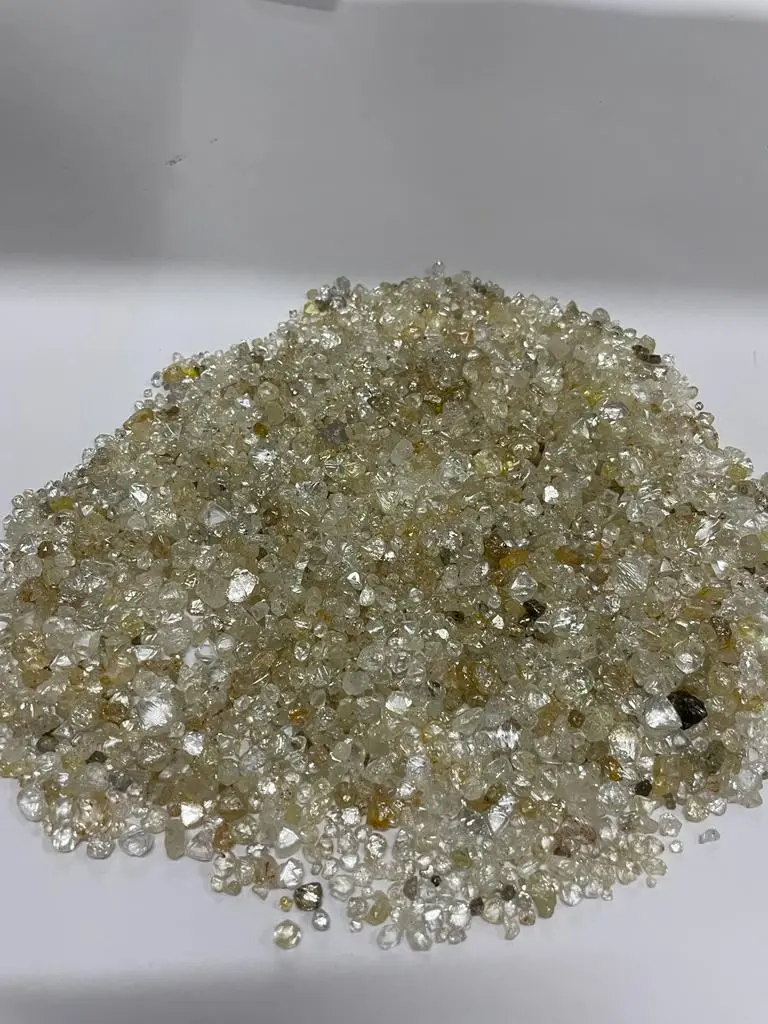
There are places in the world that mark you for life. Not because they're beautiful, though Angola is, in its own way. But because you lived through something irreducible there. Something words struggle to hold.
I was 25 the first time I set foot in the Lundas. I wasn't there as a tourist. I was there to buy rough diamonds, on behalf of two of the largest rough-buying groups in the world at the time: ASCORP (the Angola Selling Corporation, a state monopoly created in 1999) and LKI, Lazare Kaplan International. Colossal organisations. And me, barely more than a kid, right in the middle of it all.
The Mamboj, then the KP&P
You didn't travel alone in the Lundas in 2003. The war had barely ended, officially since April 2002. On the ground, not all the weapons had been handed in.
My security detail was first called the Mamboj, then they became KP&P, former combatants turned private bodyguards. Men who had lived through twenty-seven years of civil war and knew every trail, every river, every invisible danger. They followed us everywhere. Without them, nothing was possible.
At our buying counters, real fortress-counters, former soldiers turned diggers came to sell their stones. Armed. Not yet fully demobilised in their minds. They'd walk in, set their diamonds on the table, and we'd buy. A constant, underlying tension, never quite gone. But also a fragile kind of trust, built stone by stone.
The roads
A hundred kilometres. Four to six hours.
That's what travelling in Angola was like after the war. The roads hadn't been repaired since colonial times. Ruts so deep our Toyota's cab would disappear into them. We couldn't see the front of the vehicle anymore. We drove blind, by feel, praying the engine would hold.
Between Nzagi and Kassanguidi, there was a bridge. Half of it had survived the war. The other half stood open over the river below. The side still standing was just wide enough to let us through, inch by inch, the KP&P beside us, nobody breathing until we reached the far bank.
It was an adventure. It was incredible. I wouldn't trade those memories for anything in the world.
The villages
Between river crossings and nights spent under the stars, colonial Angola revealed itself to me in all its magnificent melancholy.
Small towns with avenues lined by mango trees. Houses with facades bleached by the sun, shutters half-open onto shaded inner courtyards. And in season, schoolchildren patiently waiting for mangoes to fall from the trees, or throwing stones to bring them down. Timeless scenes, in a country that had just come out of hell.
Diamonds flowing like water
And then there were the stones.
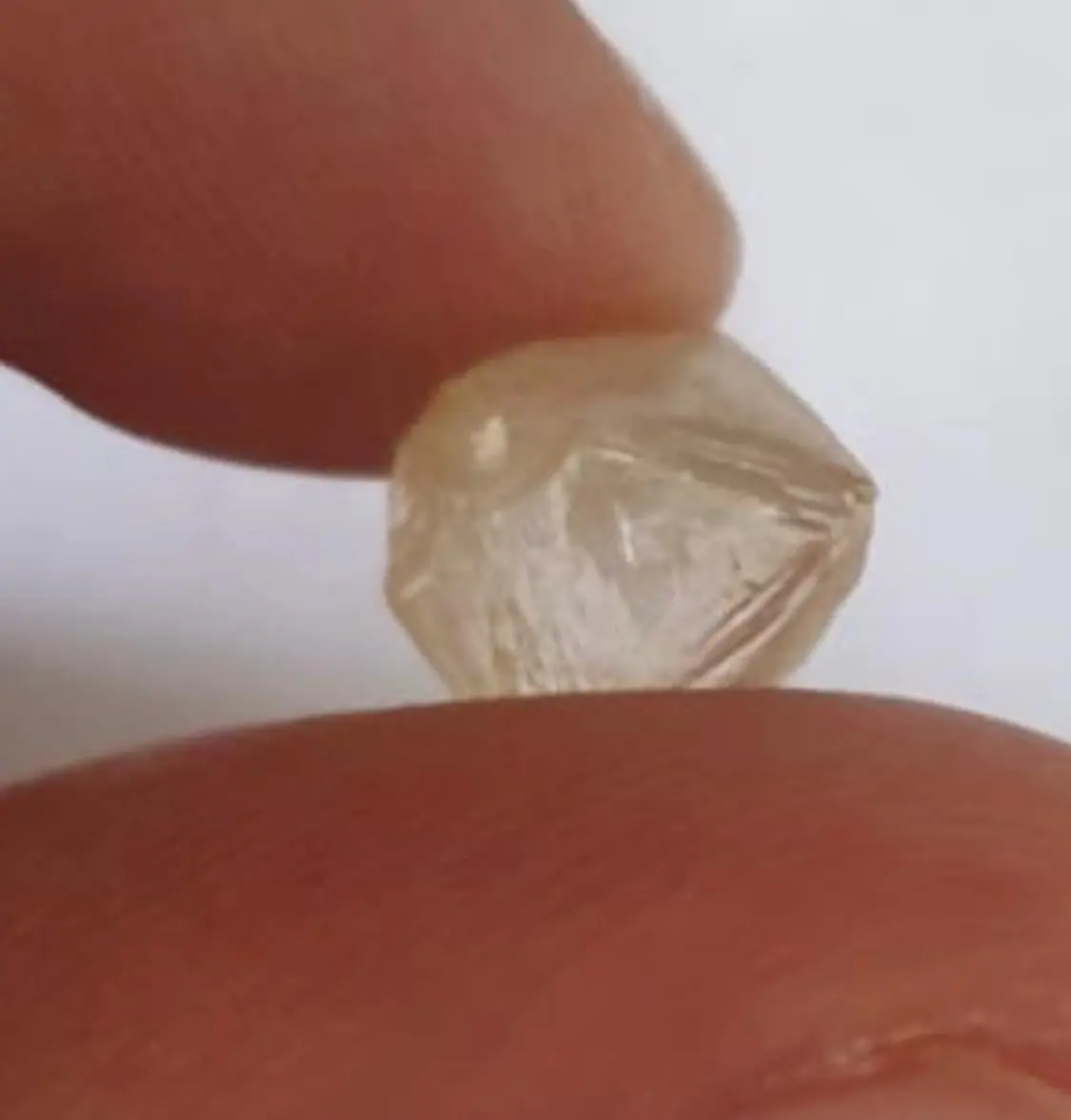
In the regions of Nzagi, Lucapa and Cafufu, I saw things few buyers ever get to see. Deposits that lasted days, sometimes weeks. Diamonds flowing in proportions I've never seen anywhere since. Rough specimens of rare perfection: clean octahedrons, smooth surfaces, transparent windows into the stone's interior. Exceptional commercial colours, highly sought after by buyers from Surat, India.
On the road between Luanda and Saurimo, passing through Chamukilenge, pinks and blues came straight out of the ground. Colours that exist almost nowhere else at that concentration.
In Lucapa, I once held a stone in my hand of a colour I had never seen before, and have never seen since: violet. A true, deep, natural violet. An extraordinary geological anomaly. One of those stones that reminds you why you chose this profession.
What those years taught me
I met incredible people. Diggers who knew the river like the back of their hand. Guards who had lived through the unspeakable and protected you with absolute loyalty. Sellers who brought a stone wrapped in newspaper, eyes shining, rightfully proud.
We lived in houses without electricity. Nights broken by torrential tropical rains. Generators that kept breaking down. Bush life, in all its harshness and all its beauty.
Those years in Angola made me the diamond dealer I am today. Not books. Not classes. The field.
Laurent de Toledo is a third-generation independent diamond dealer, HRD Certified Diamond Grader, trained at the Harry Oppenheimer Diamond Training School in Johannesburg. Nearly 30 years in diamonds, including 20 years buying rough in Angola and the DRC.