
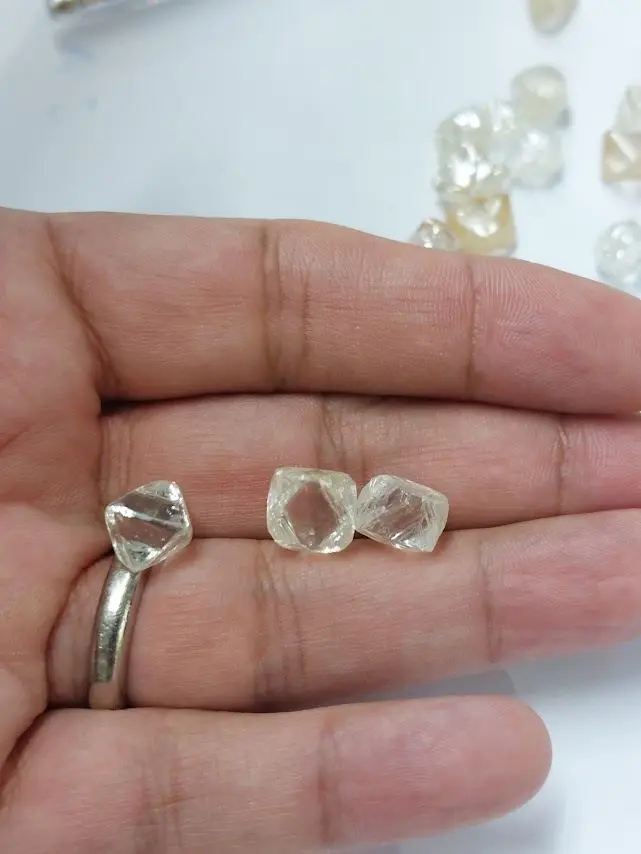
Angola is a special country to me. Not only because I worked there for years, buying production at the source in the north-eastern regions. But because Angola illustrates, better than any other country in the world, a fundamental truth about natural diamonds: their birth is a geographic accident, their journey a ruthless selection process, and their final value depends on thousands of kilometres of rivers and millions of years of erosion.
The planalto, the cradle of Angolan diamonds
At the centre of Angola stretches a vast highland plateau, the central planalto, rising above 1,700 metres. This is where the country's great rivers are born. This is where Angolan diamonds come from.
The province of Bié, at the heart of this plateau, is one of four diamond-bearing provinces confirmed by the Angolan state, alongside Lunda Norte, Lunda Sul, and Malanje. But Bié isn't just a producing province. It's a source. This is where altitude forces water northward, carrying with it diamonds torn from kimberlite rock over millions of years.
The rivers flowing down to the Lundas
From these highlands, several river systems flow north-east to feed the richest diamond-bearing regions in Central Africa.
The Chicapa (called Tshikapa on the Congolese side) rises in Lunda Sul and flows north. It crosses the town of Saurimo, runs alongside the Catoca mine, and forms the border with the DRC for about 40 kilometres before joining the Kasai in Congolese territory. Along its Angolan course, the Chicapa crosses several of the country's most important kimberlite clusters and carries millions of carats in alluvial deposits.
The Cuango (the Kwango on the Congolese side) rises in the highlands of Alto Chicapa in Lunda Sul. It flows north-north-west, runs along the DRC border for over 300 kilometres, then joins the Kasai. The Cuango is Angola's richest river for alluvial diamonds. The town of Cuango, in Lunda Norte, sits at the heart of the country's most prolific diamond-bearing territory.
The Kwanza flows down from Bié westward to empty into the Atlantic near Luanda. It too carries diamonds, evidence of the same plateau that gave rise to them.
Angola's first alluvial discoveries took place in 1912: prospectors moving upstream from the Tshikapa fields in Congo followed the Luembe river and found what geologists were looking for, the African source of one of the world's largest alluvial deposits.
The towns and names I learned
In the Lundas, a few names come up in every trade conversation: Nzagi, Fucauma, Dundo, Lucapa, Saurimo. These are the historic centres of Angolan alluvial production, towns that have lived to the rhythm of yields and droughts, rising prices and market crashes.
Lucapa and Nzagi, the first areas mined at scale. Dundo, historic capital of the Lundas, seat of Diamang, the great Portuguese colonial company that dominated production until independence in 1975. Saurimo, administrative capital of Lunda Sul, now being transformed into the hub for cutting and trading Angolan diamonds.
The kimberlites, the mines that changed Angola
For the first seventy years of production, all Angolan diamonds were alluvial. Then came the kimberlites.
Catoca is today the world's 4th largest diamond mine by production volume. Located in Lunda Sul, 35 kilometres from Saurimo, it has long accounted for up to 80% of Angola's total output.
Luele (formerly known as Luaxe) is the big new arrival. Discovered in 2013 in Lunda Sul, just 25 kilometres from Catoca, it began commercial production in 2023. Its estimated reserves: 628 million carats. Its projected lifespan: 60 years. Independent analyst Paul Zimnisky described it as "the only major new diamond mine in the world to enter production this decade".
Camutue (in Lunda Norte) produces Type IIa diamonds, the chemically purest that exist, nitrogen-free, of absolute transparency. A rare and precious classification.
What these diamonds are
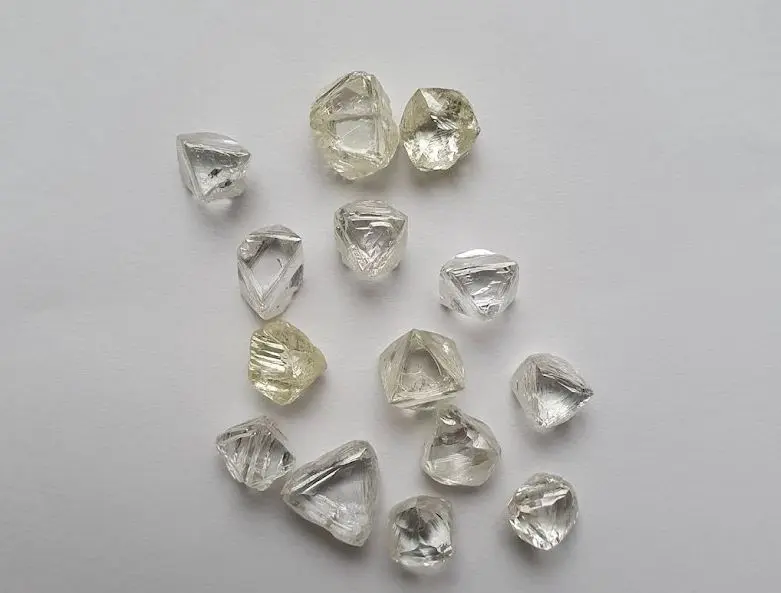
Angolan diamonds have a worldwide reputation for their large sizes and purity. The Lulo mine, in Lunda Norte, on the Cacuilo river, produced the "Lulo Rose" in 2022, a 170-carat pink diamond, the largest pink stone found on Earth in over 300 years. The same mine had previously produced the "4 de Fevereiro", 404 carats, white, of exceptional purity.
These discoveries are no accident. They're the result of a particular geology: kimberlites among the oldest and best-preserved in Africa, in a region that civil war kept off-limits to modern exploration until 2002. Angola is probably the least explored country in Africa relative to its real potential.
The Angola I knew
I worked in Angola at a time when roads were still torn up by war, when military aircraft shared runways with commercial flights, when the security of a transaction was measured as much by the reliability of the person across the table as by the quality of the stone.
That country taught me something gemmology courses don't: a diamond is only worth what its human chain can deliver in trust. The mine can be extraordinary, if conditions on the ground aren't, the diamond never reaches the market cleanly.
Today, Angola has undertaken a deep reform of its diamond sector: transparency, a cutting hub in Saurimo, diversified partnerships. The country I knew in the 2000s is changing. For the better.
Laurent de Toledo is a third-generation independent diamond dealer, HRD Certified Diamond Grader, trained at the Harry Oppenheimer Diamond Training School in Johannesburg. Nearly 30 years in diamonds, including 20 years buying rough in Angola and the DRC.