The elongated cushion, also called a long cushion, is the shape people ask me for most right now for an engagement ring. On this page I explain how to choose one, and I show real stones from the catalogue with their prices.
Looking for one specific stone, in white, yellow, cognac or an antique cut? Describe it at the bottom of the page and I will find it for you.
A cushion cut diamond has rounded corners and slightly curved sides, like a small pillow. When the stone is square it is simply called a cushion. When it is longer than it is wide, it is an elongated cushion. What sets them apart is the ratio between length and width: a stone measuring 8 mm by 6 mm has a ratio of 1.33.
Depending on the laboratory, the certificate may say "cushion" or "cushion modified brilliant". Both can describe an elongated stone, so read the ratio and the measurements, not only the name of the shape.
Nobody needs to know a length-to-width ratio to choose an elongated cushion. There is no exact rule: some people want a very long stone, others a shorter one. What really matters is seeing the stone: how it was cut, how it sparkles, what it looks like when you move it in the light. In a fancy shape like this one, it is not the grade on a certificate that decides, it is the visual. The numbers further down are only landmarks.
The simplest way to start: tell me your budget, or the weight you have in mind, 2 carats or 3 carats for example, even if you have no idea what it is worth. I show you stones in photos and video, with their price, and you choose with your eyes.
In late August 2025, Taylor Swift announced her engagement to Travis Kelce. According to the trade press, her ring carries an antique elongated diamond in an old mine cut, set in 18 carat yellow gold. The weight has never been officially confirmed: estimates range from 4 to 10 carats. The photos went around the world, and since then requests for elongated cushions have multiplied, in white as well as in colour. Many clients want this look, without always knowing that a real antique stone of this kind is very rare, as I explain below.
There is no official rule, but there are benchmarks the trade uses. Below 1.15 the stone looks almost square. Between 1.20 and 1.30 the elongation is soft and discreet. Between 1.30 and 1.45 it is clear, and this is the most requested range today. Above 1.45 the stone becomes very long, rarer and more pronounced.
The right ratio depends mostly on the hand and on the jewel. An elongated stone slims the finger and often shows more surface than a square stone of the same weight. The best approach is to compare several ratios: I can show you stones close to your taste with their exact measurements.
The elongated cushion is requested in white (D to J), in yellow (fancy yellow, fancy intense), and more and more in brown, cognac and champagne. The online catalogue below only shows white stones. Coloured stones I search for on request: see the page on cognac, champagne and brown diamonds.
For a fancy shape like the cushion, a GIA certificate does not give an overall cut grade the way it does for a round diamond. So you have to look at the stone and its proportions. On an elongated cushion I check above all the bow-tie effect: a darker area across the centre, more common on long stones. Almost all have it, what matters is that it stays discreet.
I also look at the symmetry of the corners, how the light is spread and the colour. A photo or a video of the stone lets me tell you what I see before you decide. Every diamond I offer is natural, with a GIA or HRD certificate.
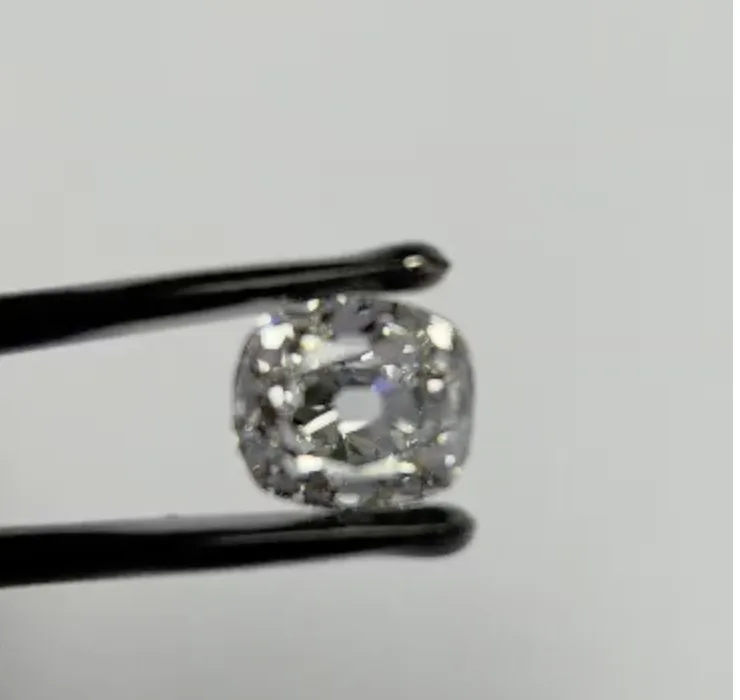
Many people look for an antique elongated cushion, also called an old mine cushion elongated. It is practically impossible to find, and the reason is simple. In the past, the cutter started from the rough diamond and made the best stone it could from it. He was not aiming for a given length: the shape came from the rough, it was a calculation made stone by stone.
When the rough was long, the cutter often made an oval, a pear or an old marquise, not an elongated cushion. So true elongated antique cushions are rare. When I find one it is unique, and its price depends on its hand cutting, its colour and its history. If you want one, tell me and I will look for it.
Because genuine elongated antique stones are very hard to find, there is another solution: modern cuts, made today to look like an antique cushion. Their facets are broader and their look softer, like a stone from the past. These stones are still called "old cut" or "antique cut", but they are cut today. Just tell me: "I want a stone that looks like an antique stone". I will look for it for you. It will not have the same charm or history as a genuine antique stone, and that charm is always below the real thing, but it has a lot of its own, and it is often more accessible and quicker to find for an engagement ring.
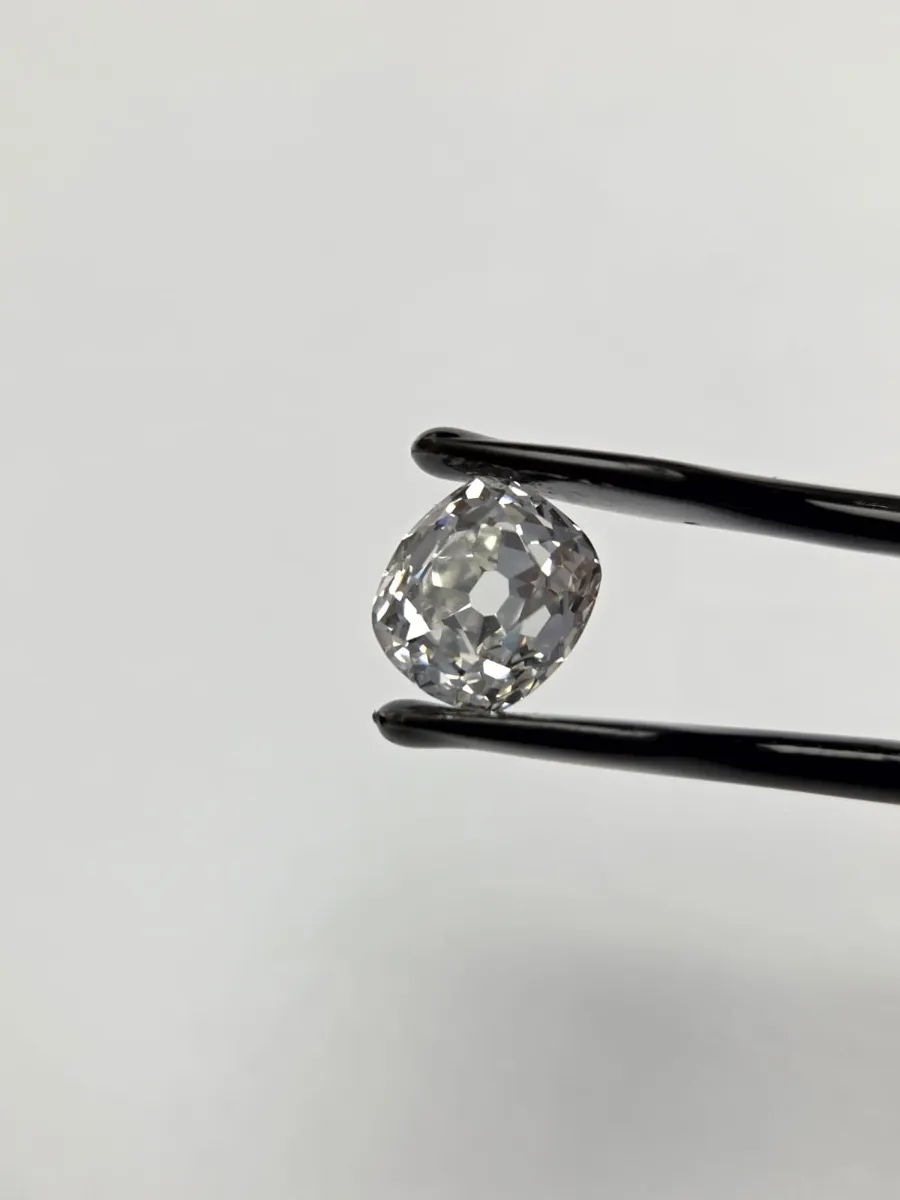
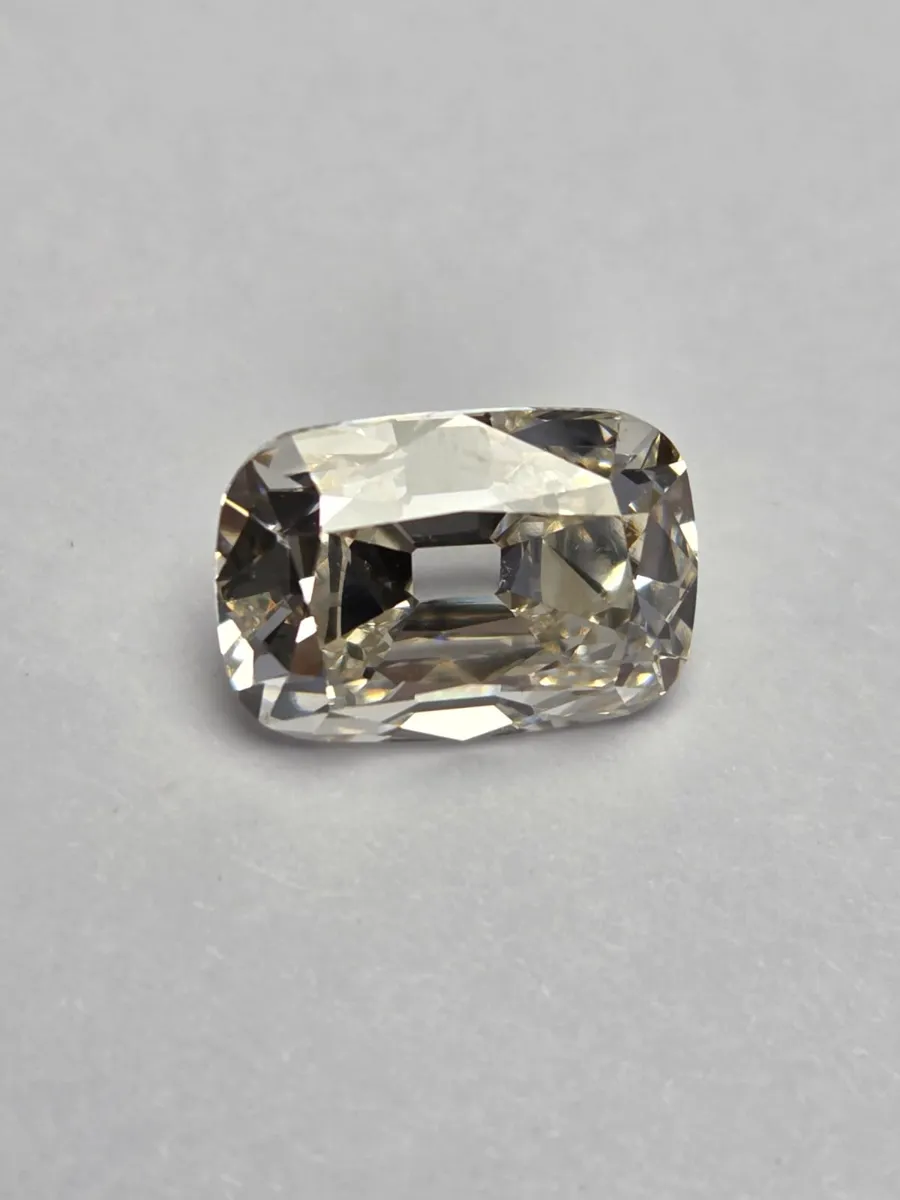
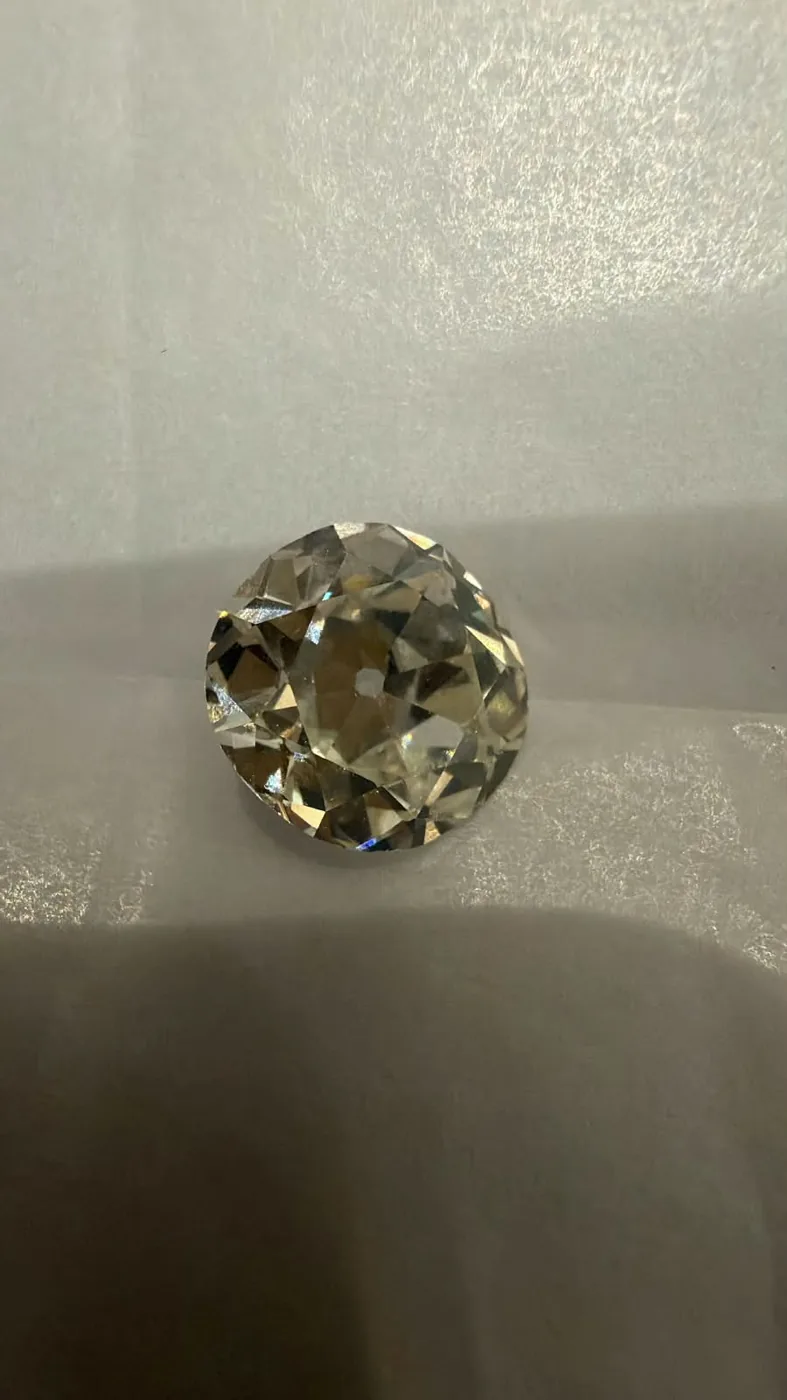
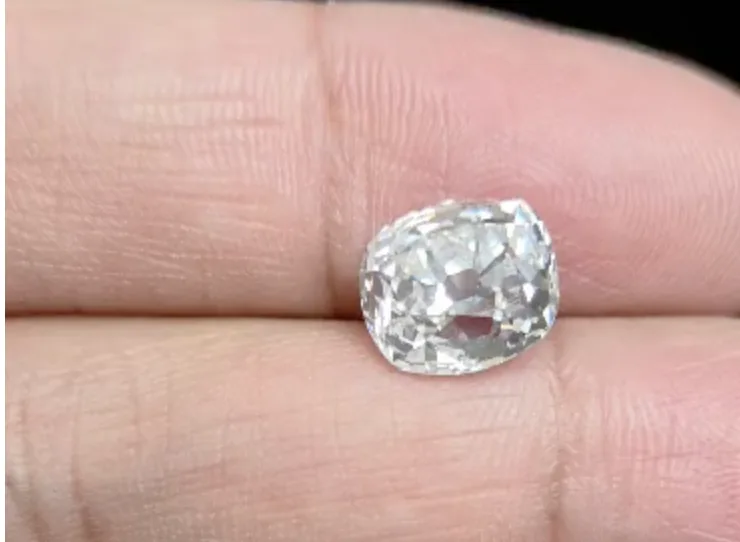
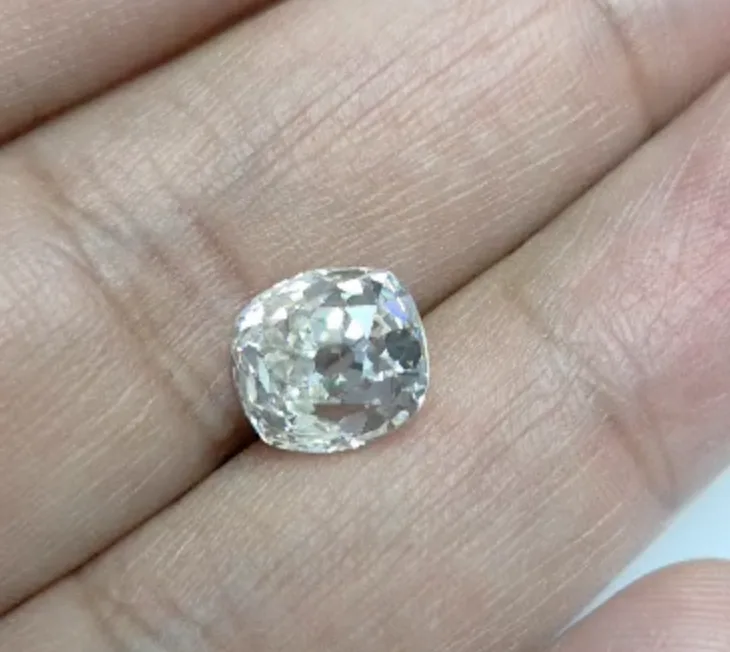
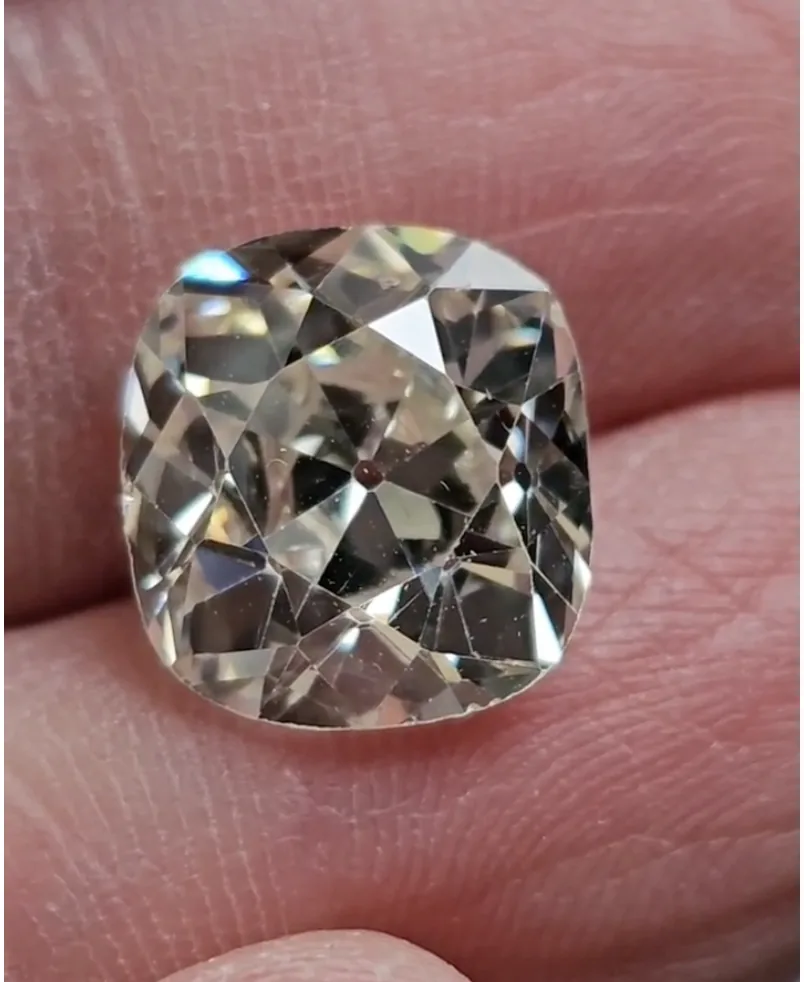
Start by telling me your budget or the weight you like. The table on this page already gives you the prices from, by weight. Then I show you a few stones in photos and video, with their exact price, and you choose the one that pleases your eye.
It is a cushion cut diamond that is longer than it is wide. Its length-to-width ratio is generally above 1.15 or 1.20. It is also called a long cushion. It is worn in an engagement ring, a pendant or earrings.
With a diamond dealer who selects stones one by one. I offer natural elongated cushions, GIA or HRD certified, with their exact measurements. If you want a specific stone, describe it in the form: Laurent will find it.
It depends on carat weight, colour, clarity and the length-to-width ratio. The table on this page shows the starting price for each weight, taken from the catalogue. Natural diamonds are priced stone by stone.
It depends on clarity and ratio as well as colour. The table above gives the starting price for 2 carats. For an F or D colour precisely, tell me what you want and I will give you the exact price within 24 hours.
Between 1.30 and 1.45 the elongation is clear and it is the most popular. Between 1.20 and 1.30 it is more discreet. Above 1.45 the stone is very long. It is a matter of taste: I can show you several ratios to compare.
Often yes. At the same weight an elongated stone usually shows more surface and it slims the finger. That is one reason for its success.
D, E and F are colourless. G and H are near colourless and look very white once set. On a cushion the colour shows a little more than on a round brilliant. I show you the stones side by side so you can judge for yourself.
Yes, these colours are very popular. They are not in the online catalogue: I search for them on request. See the page on cognac, champagne and brown diamonds.
They are very rare. In the past the diamond was cut to the shape of the rough, without aiming for a given ratio, and long rough gave ovals, pears or old marquise cuts rather. If you are looking for one, I will search for it.
The bow-tie is a darker area across the centre of the stone. Most elongated stones have it. What matters is that it stays discreet, and it can be seen on a photo or a video: I check before I offer you a stone.
No. I only offer natural diamonds with a GIA or HRD certificate.
Yes. These are stones cut today in the spirit of an antique cushion, with a softer look. They do not carry the history of a genuine antique stone, but they are easier to find and quicker to get. Tell me you want that look and I will search for them for you.