A continuous line of certified natural diamonds, on a flexible gold setting. Here too, everything starts with the quality of the stone, the setting comes next.
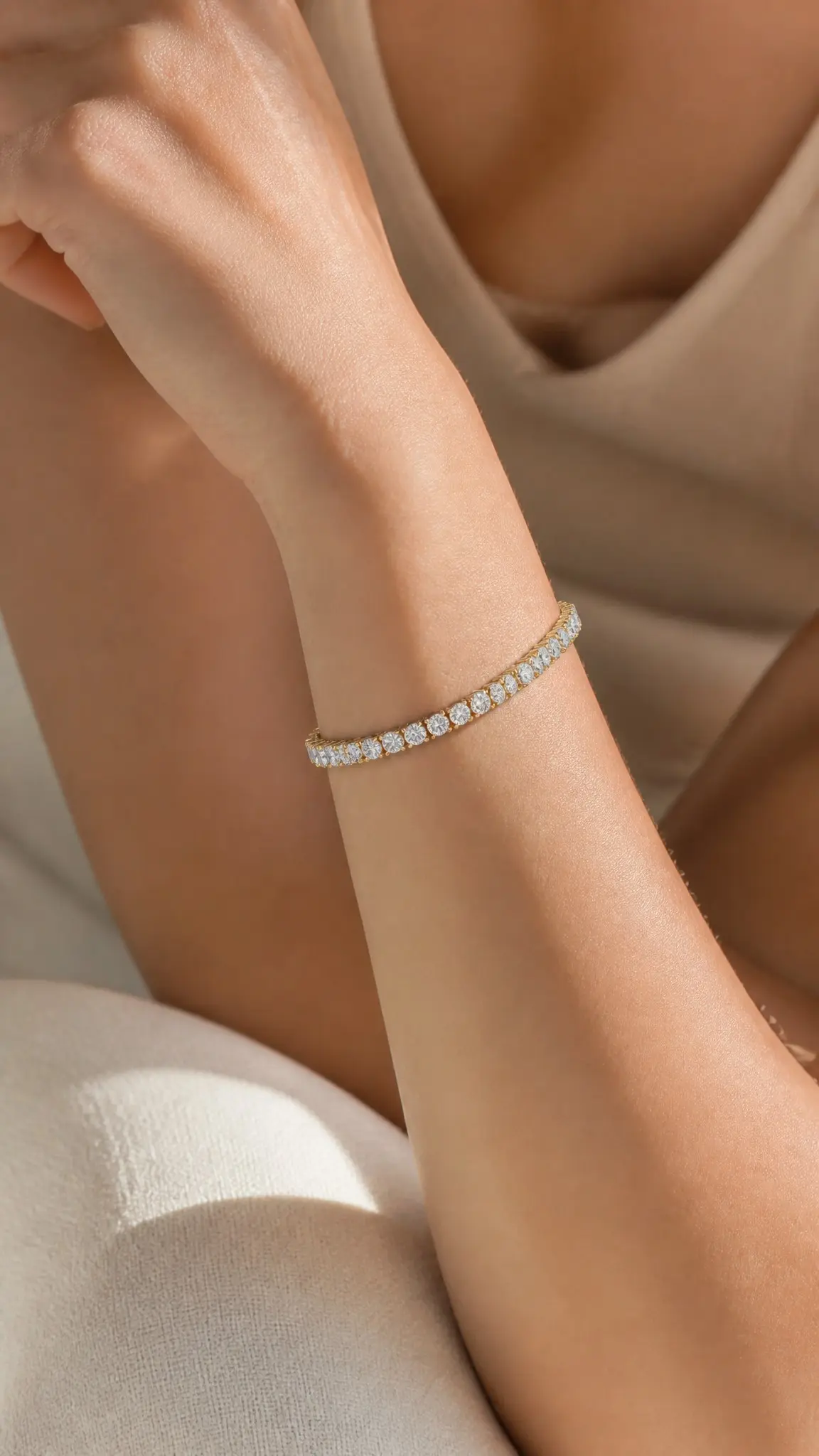
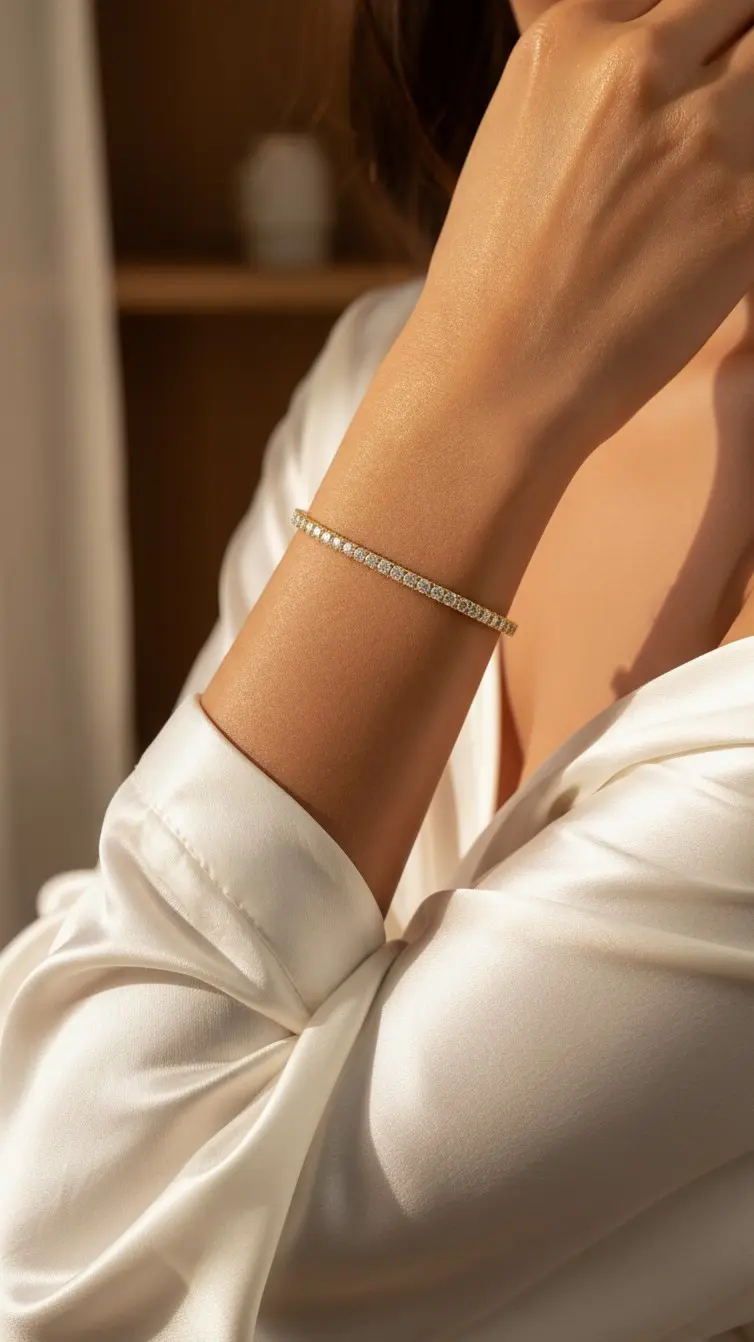


As with all my stones, the first question is never "which design?" but "which diamonds?". Total carat weight, colour and clarity of each stone determine the overall brilliance far more than the setting's design. I select certified natural diamonds, consistent in colour and clarity along the full length of the bracelet, that consistency is what gives it its unbroken shine.
White, yellow or rose 18k gold, prong-set or bezel-set depending on the style you want. The setting is made to measure once the diamonds are chosen, never the other way round.
Give me a range rather than a single choice, it helps me find you the best value for money.
In 1987, at the US Open, player Chris Evert was wearing a diamond line bracelet during a match. The clasp broke, the bracelet fell onto the court, and she asked for play to stop so she could find it. The story made headlines, and the name has stuck ever since for any bracelet made of a continuous line of diamonds on a flexible setting.
A tennis bracelet lines up diamonds of identical or very similar size along its full length, for a steady, continuous sparkle. A rivière bracelet varies stone sizes, sometimes gradually, for a more organic effect. Both are "line" bracelets, but the tennis remains the more understated, classic of the two.
There's no strict rule, it's a matter of preference. Many wear it on the opposite wrist from their watch. Others deliberately pair it with the watch on the same wrist, for a more contemporary stacked look.
This depends above all on the total carat weight and quality (colour, clarity) of the diamonds chosen, far more than the setting style. Describe your approximate budget in the form above, and I'll put together a suitable selection.