The brown diamond, called champagne or cognac depending on its shade, is one of the most requested natural colours right now, in cushion as well as elongated cushion. I select them one by one for my clients.
These stones are not in the online catalogue: I search for them on request. Tell me what you want, I will send you photos, videos and a price.
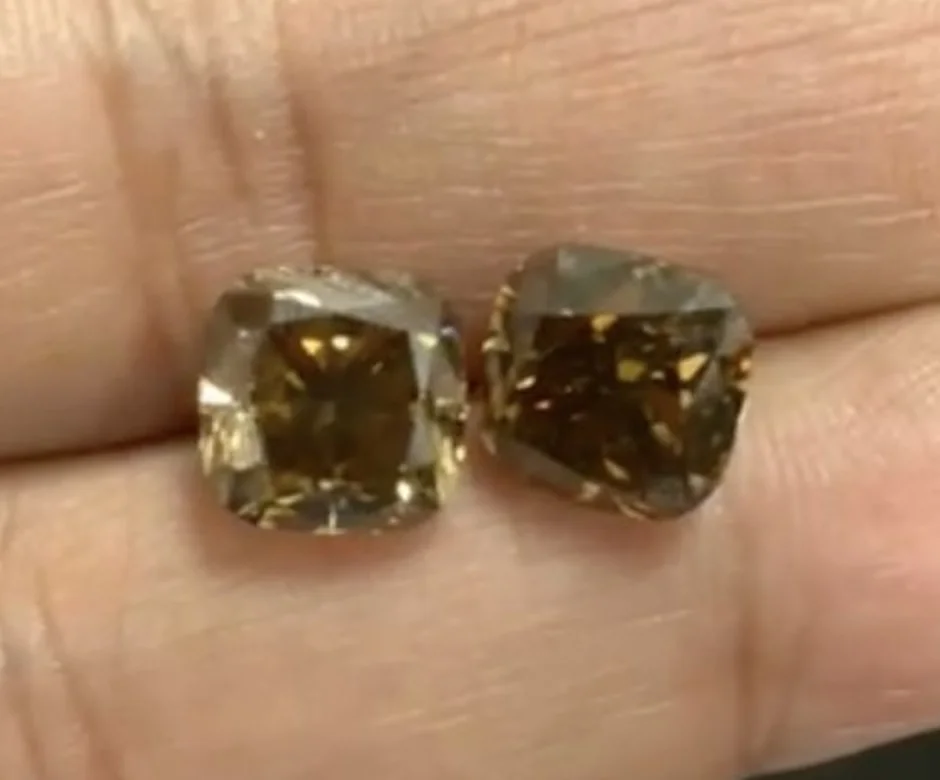
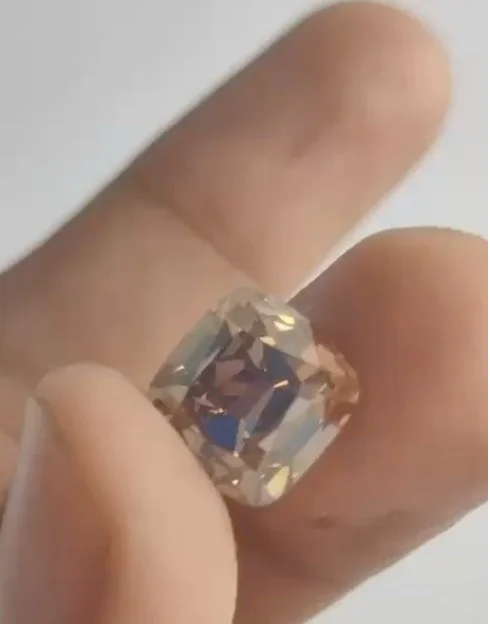
A brown diamond is a natural diamond whose colour comes from the distortion of its crystal structure while it formed. It is not an impurity. The words champagne and cognac are trade words, not laboratory terms: champagne generally means a light, golden brown, cognac a deeper, warmer brown leaning towards orange.
On a certificate the laboratory speaks of brown, with an intensity and often a modifier, orangy or yellowish. I read that for you and I check that the colour is natural.
Brown mostly comes from a distortion of the crystal, which happens while the diamond forms or travels up to the surface. It is not an impurity colouring the stone. Brown is the most common natural colour: in most mines, around 15% of production is brown.
The best-known source is the Argyle mine in Australia. It opened in December 1985, closed on 3 November 2020, and about 80% of its diamonds were brown. It also supplied almost all the world's pink and red diamonds. In the 1980s and 1990s it launched the names "champagne" and "cognac" to make people love these shades. Brown stones also come from South Africa, the Democratic Republic of Congo, Lesotho and India. Since Argyle closed, the mine produces nothing new.
You will never read "champagne" or "cognac" on a certificate. They are commercial names. The laboratory grades the colour: a very light brown sits on the white D to Z scale, then darker browns receive a fancy colour grade. In everyday use, champagne means a light brown and cognac an amber brown leaning to orange. "Chocolate" has been a trademark of the Le Vian house since 2000. Rio Tinto also created its own C1 to C7 scale for its browns, but that is not a laboratory scale. For a real comparison, always look at the certificate and at the stone.
The cushion and above all the elongated cushion are the most requested, because brown gives a lot of warmth to this soft shape. They are also requested in oval, emerald cut, radiant, and sometimes in an antique cut. To understand elongation and the length-to-width ratio, read the page on the elongated cushion diamond.
An engagement ring with a cognac or champagne diamond pairs very well with yellow or rose gold, which echo the warmth of the shade, but also with white gold for a more contrasted look. These stones are also set in pendants, earrings or a ring with character. I advise you on the setting and I have the jewel made in Paris.
I search my network of cutters and suppliers, in Belgium and in Paris. You give me the weight, the shape, the shade you want and your budget. I then send you a few stones with photos, videos and certificate, and their price. You choose, or you ask me to refine. I answer myself, within 24 hours.
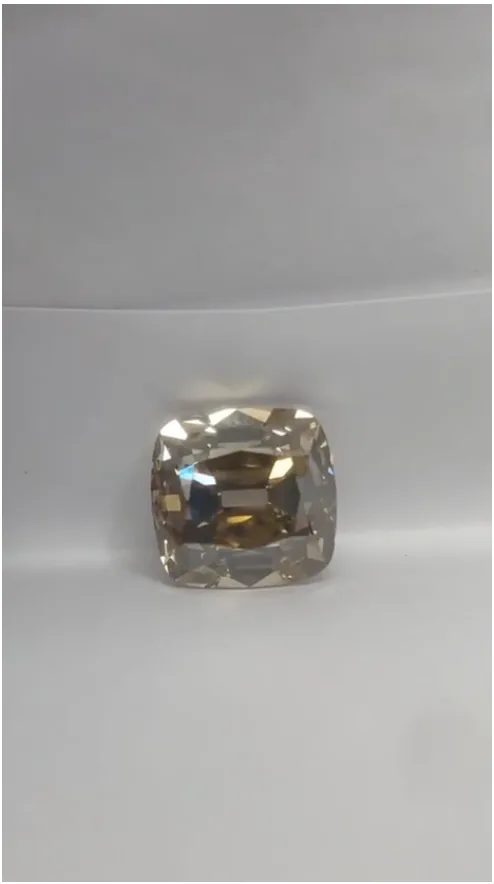
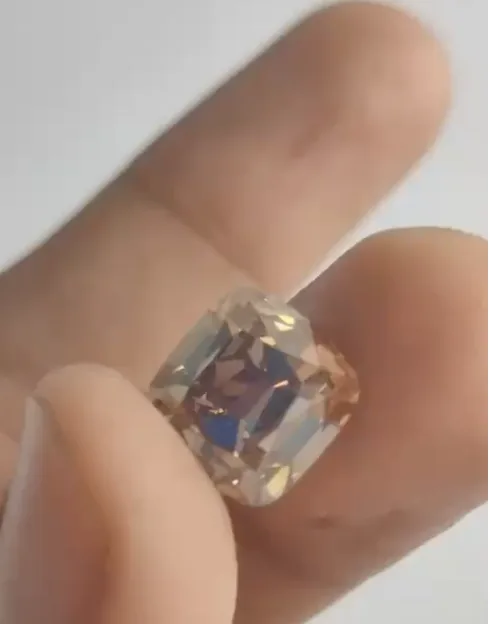
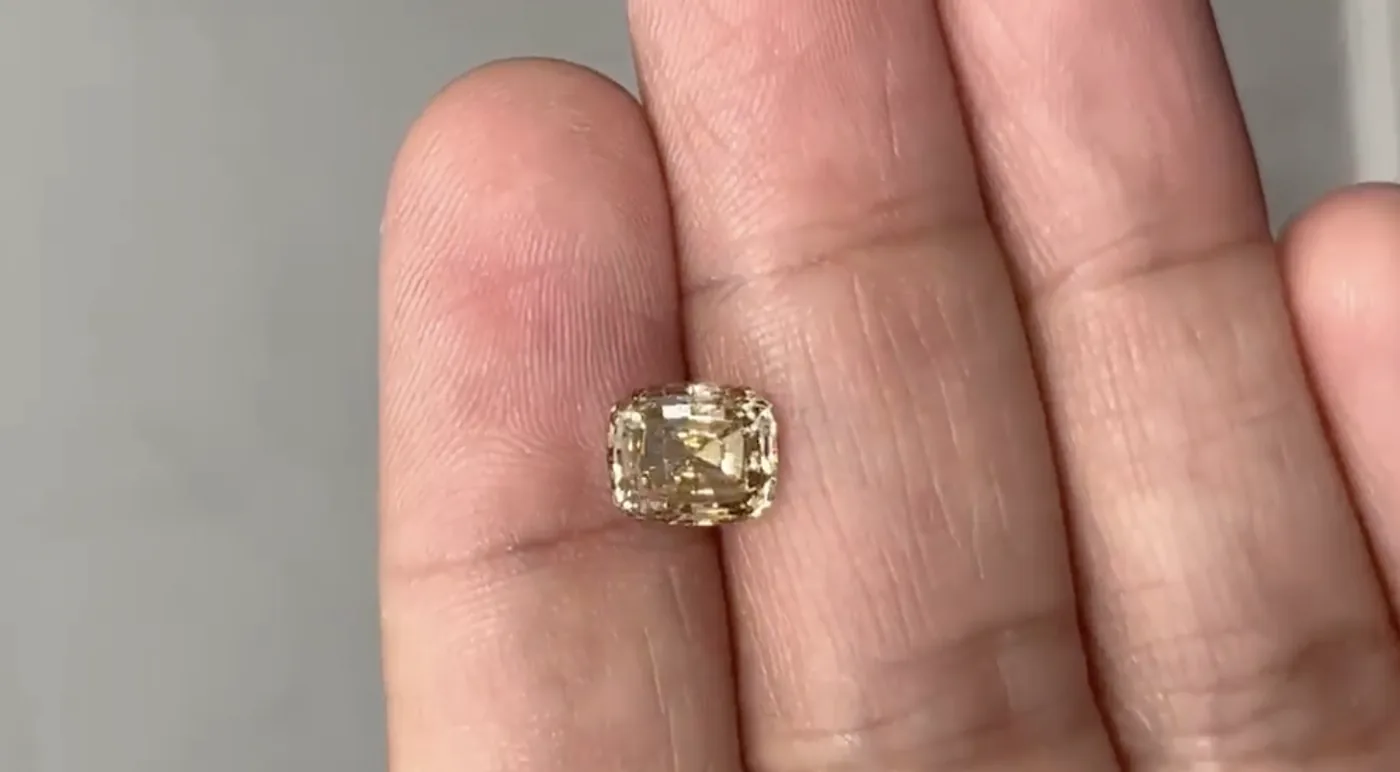
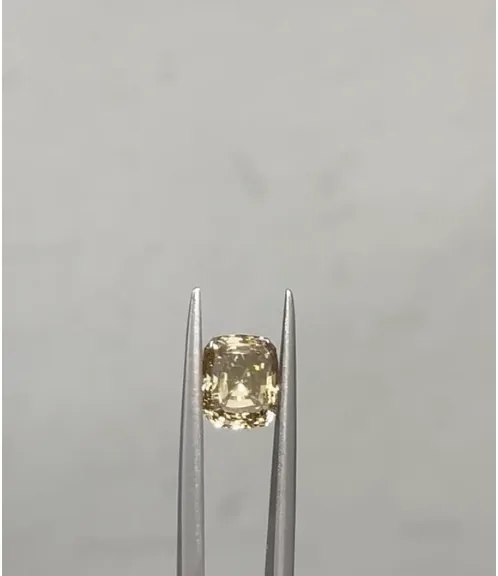
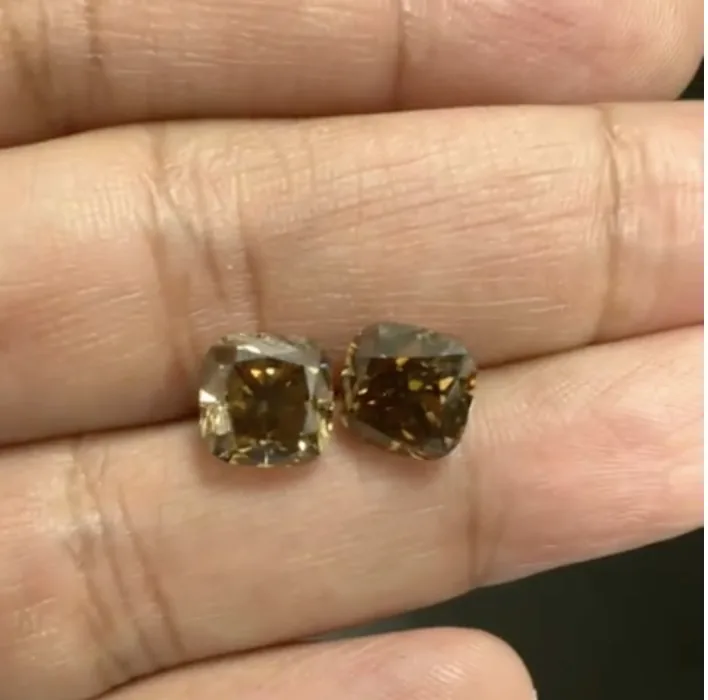
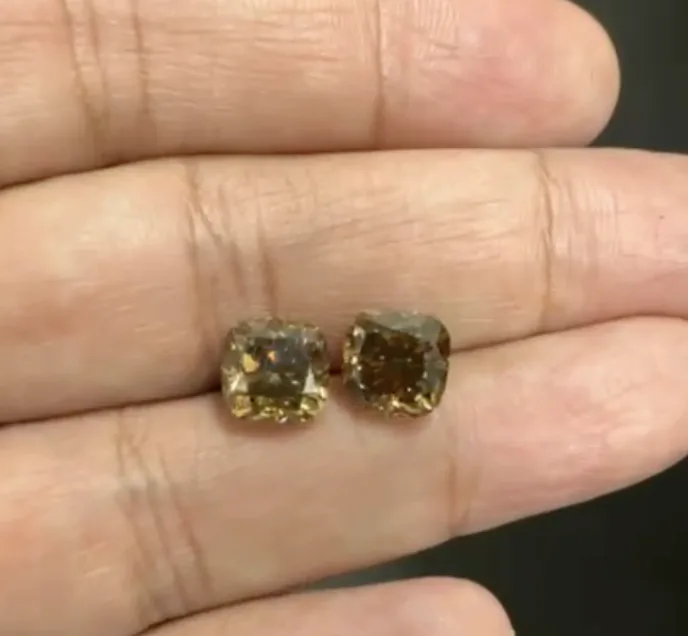
They are two trade words for browns of different depth. Champagne is a light, golden brown, cognac a deeper, warmer brown with an orange glow. The certificate itself speaks of brown with an intensity and a modifier.
Yes, they are real natural diamonds, the same material as white ones. Their colour comes from the distortion of the crystal. Some browns are treated to change colour: I check on the certificate that the shade is natural.
At the same size a brown is often more accessible than a white of comparable quality, but the price depends on intensity, shade, clarity and size. I give you a precise price with the photos of each stone.
From a diamond dealer who selects stones one by one. I search for them on request for my clients, with a GIA or HRD certificate, and I welcome you in Paris to see them in person if you wish.
Yes, it is one of the most frequent requests. Tell me the weight and elongation you want and I will search. To understand elongation, read the page on the elongated cushion.
Yes, more and more couples choose it for its warmth and originality. It is as durable as any diamond. It sets very well in yellow, rose or white gold.
No. I only offer natural diamonds with a GIA or HRD certificate.