Synthetic diamond, also known as lab grown or laboratory diamond (CVD method): I show you real pairs, from 1 to 2 carats per stone, with their certificate, colour, clarity and measurements.
Two truly identical-looking diamonds, set in Paris in the gold of your choice. The price of the two stones is shown including tax, and we discuss the setting together.
A synthetic diamond, also called a laboratory diamond or lab grown diamond, is a real diamond: it has the same chemical composition and the same crystal structure as a natural diamond (source: GIA). What differs is its origin: it is made by people, most often with the CVD method, chemical vapour deposition. French law requires it to be called “synthetic” (decree no. 2002-65 of 14 January 2002), so that is the word I use to describe my stones.
Earrings need two stones, so the budget doubles. With a synthetic diamond, the same budget lets you choose larger, whiter and purer stones. That is why I start at one carat per stone. And I stay with the beautiful qualities, from VVS to VS clarity, so that the light really shows.
Two diamonds of the same weight can have two different diameters, two different shades of white, or a different clarity. On one ear you do not notice it, side by side you do. So I only offer pairs whose two stones have the same certificate, the same colour, the same clarity and measurements that agree to the hundredth of a millimetre.
Both are real diamonds, but they do not have the same story. The natural diamond formed in the earth more than a billion years ago (source: GIA), and it is rare. The synthetic diamond is made, and it costs much less. You can also see my selection of natural diamond earrings and read my guide natural or synthetic diamond.
I have the diamonds set in Paris, on solid posts and backs. Four claws for the light, three claws for elongated shapes, or a bezel for a protected stone: the choice of setting is made with you.
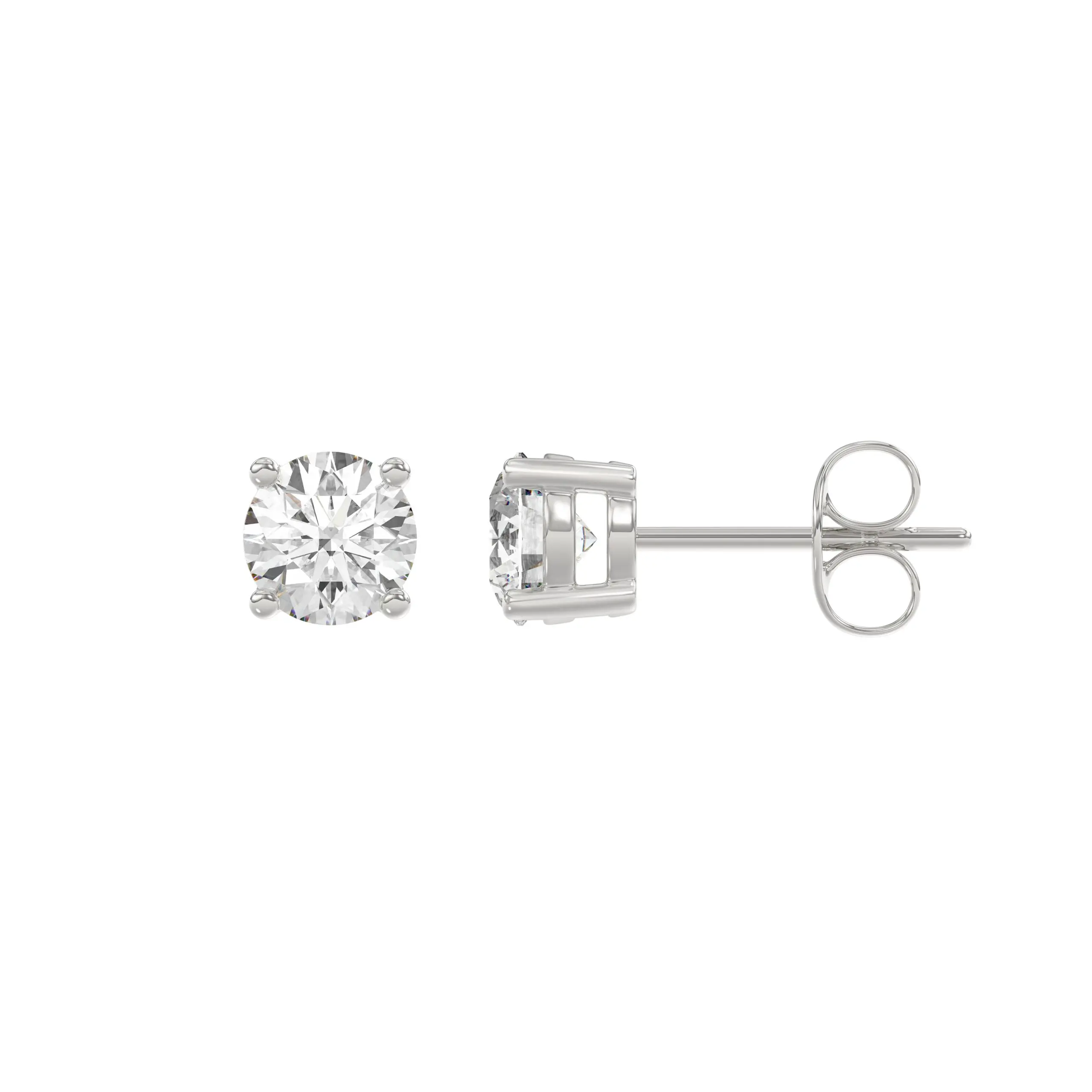

They are three ways of speaking about the same thing: a diamond made by people, with the same chemical composition and crystal structure as a natural diamond (source: GIA). In France the law requires the word “synthetic” (decree no. 2002-65 of 14 January 2002). “Laboratory diamond” and “lab grown” are the words customers type online, so I explain them here to help you find the information.
CVD stands for Chemical Vapor Deposition. In a reactor, a gas containing carbon is deposited layer by layer on a diamond seed, and the diamond grows. The other main method is called HPHT (high pressure, high temperature). The growth method is stated on each stone’s certificate.
Yes: it is pure crystallised carbon, like a natural diamond, with the same physical and optical properties (source: GIA). What changes is its origin, which is why the law requires it to be stated clearly and why its price is much lower.
Because from one carat per stone, diamond earrings really have presence. If you are looking for smaller stones, write to me on WhatsApp and I will search for you.
Two diamonds that truly look alike: same certifying laboratory, same colour, same clarity and measurements that agree to a few hundredths of a millimetre. Two diamonds of the same weight do not always have the same diameter, and on an ear the eye sees it.
No. The price shown is for the two diamonds, tax included. The setting (posts, backs, mounting, metal) is discussed with me, according to the gold you choose and the setting that suits your stones. Write to me on WhatsApp or fill in the form and I will reply within 24 hours with a quote.
Yes. Each stone has its certificate, and I only offer pairs whose two stones have the same certificate, never mixed. The certificate states the weight, colour, clarity, measurements and growth method.
Yes. Rarer shapes, such as pear or heart, are harder to match. Ask Laurent with the WhatsApp button on the page: I search, check and find stones that truly look alike.